XMR vs ZEC Store of Value: Evaluating Privacy, Security, and Long-Term Viability in the Crypto Ecosystem
Understanding XMR and ZEC as Privacy-Focused Cryptocurrencies
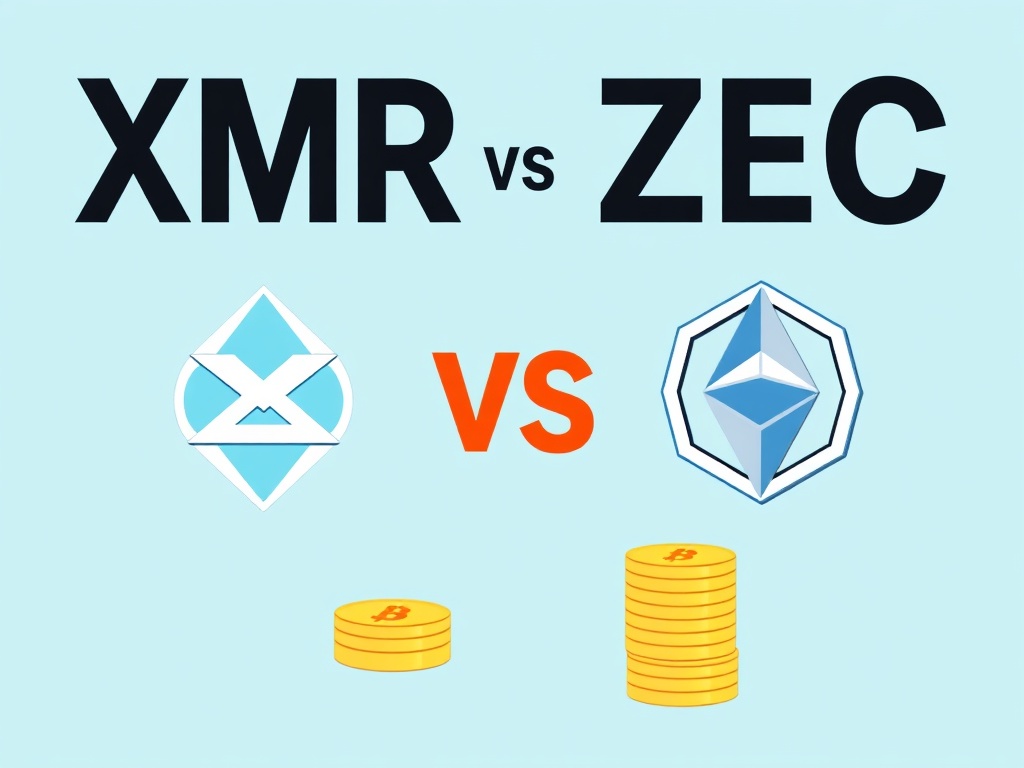
The debate around XMR vs ZEC store of value often centers on their unique approaches to privacy and security. Monero (XMR) and Zcash (ZEC) are both designed to offer users a level of anonymity that traditional cryptocurrencies like Bitcoin (BTC) cannot provide. This distinction is critical when evaluating their potential as a store of value, especially in an era where financial privacy is increasingly under scrutiny. Both XMR and ZEC utilize advanced cryptographic techniques to obscure transaction details, but their implementations differ significantly. For instance, XMR employs ring signatures and stealth addresses to ensure complete transaction privacy, while ZEC relies on zero-knowledge proofs (ZKPs) to allow users to choose between transparent and private transactions. These differences directly impact their suitability as a store of value, as privacy can influence adoption, regulatory compliance, and long-term trust.
What is Monero (XMR)?
Monero (XMR) was launched in 2014 as a fork of Bitcoin, with a primary focus on privacy. Unlike Bitcoin, which is pseudonymous, XMR is fully anonymous by design. Every transaction is encrypted, and no external party can trace the sender, receiver, or amount transferred. This makes XMR a popular choice for users seeking to protect their financial activities from surveillance. The cryptocurrency’s decentralized nature and resistance to censorship further enhance its appeal as a store of value. However, its privacy features have also drawn criticism from regulators, who argue that anonymity can facilitate illicit activities. Despite this, XMR’s strong community support and continuous development efforts have solidified its position in the crypto market.
What is Zcash (ZEC)?
Zcash (ZEC), introduced in 2016, offers a different approach to privacy. It allows users to conduct either transparent or private transactions, giving them control over their data. This flexibility is achieved through zero-knowledge proofs, which enable verification of transactions without revealing sensitive details. While ZEC’s optional privacy feature may seem less secure than XMR’s mandatory anonymity, it also provides a middle ground for users who want to balance transparency with privacy. This adaptability could make ZEC more appealing to institutions or users who require compliance with regulatory standards. However, the reliance on ZKPs has raised concerns about potential vulnerabilities, as the complexity of these proofs could be exploited if not implemented correctly.
The Concept of Store of Value in Cryptocurrencies
A store of value is an asset that retains its purchasing power over time, serving as a reliable medium for saving and transferring wealth. In the context of cryptocurrencies, this concept is particularly relevant as digital assets increasingly compete with traditional stores of value like gold or fiat currencies. For XMR vs ZEC store of value discussions, it is essential to assess how well each cryptocurrency meets the criteria of scarcity, durability, and portability. Both XMR and ZEC have limited supply mechanisms, which contribute to their scarcity. Monero has no maximum supply cap, but its inflation rate is designed to decrease over time, while ZEC has a fixed supply of 21 million coins. This scarcity can enhance their value retention, but it also depends on market demand and adoption rates.
- Scarcity: Both XMR and ZEC have mechanisms to limit their supply, though their approaches differ.
- Durability: As digital assets, they are not subject to physical degradation, making them more durable than traditional stores of value.
- Portability: Both can be transferred globally with minimal friction, a key advantage over physical assets.
However, the effectiveness of XMR and ZEC as a store of value is also influenced by their volatility. Cryptocurrencies are inherently more volatile than traditional assets, which can undermine their reliability as a store of value. This volatility is often tied to market sentiment, regulatory developments, and technological advancements. For instance, a sudden regulatory crackdown on privacy coins could lead to a sharp decline in their value, making them less attractive as a long-term store of value.
Comparing XMR and ZEC as Store of Value Assets
Privacy and Anonymity Features
Privacy is a cornerstone of both XMR and ZEC, but their implementations differ in critical ways. XMR’s mandatory anonymity ensures that all transactions are untraceable, which is a significant advantage for users prioritizing privacy. This feature makes XMR particularly attractive in regions with strict financial surveillance or where users seek to avoid censorship. On the other hand, ZEC’s optional privacy allows users to opt for transparency, which can be beneficial for compliance with anti-money laundering (AML) regulations. However, this flexibility also means that ZEC transactions are not inherently private, which could limit its appeal for users seeking maximum anonymity. When evaluating XMR vs ZEC store of value from a privacy perspective, XMR’s design is more robust, but ZEC’s adaptability might appeal to a broader audience.
Transaction Speed and Scalability
Transaction speed and scalability are crucial factors for any cryptocurrency aiming to function as a store of value. XMR has a block time of approximately 2 minutes, which is relatively fast compared to Bitcoin but slower than some other cryptocurrencies. Its scalability is limited by the size of its blocks, which can lead to congestion during periods of high demand. ZEC, on the other hand, has a block time of around 2.5 minutes, similar to XMR. However, ZEC’s use of zero-knowledge proofs can introduce additional computational overhead, potentially slowing down transactions. Both cryptocurrencies face challenges in scaling to handle large volumes of transactions, which could impact their viability as a store of value in a high-demand environment. For users prioritizing speed, neither XMR nor ZEC may be ideal, but their privacy features often outweigh this limitation for many users.
Security and Decentralization
Security and decentralization are vital for the long-term viability of any store of value. XMR is secured by a proof-of-work (PoW) consensus mechanism, which is energy-intensive but provides strong security against attacks. Its decentralized network of miners ensures that no single entity can control the blockchain. ZEC also uses PoW but has a more complex security model due to its zero-knowledge proofs. While this adds a layer of complexity, it also introduces potential vulnerabilities if the cryptographic algorithms are compromised. In terms of decentralization, both XMR and ZEC have large, distributed networks, but XMR’s community-driven development and lack of central authority give it a slight edge in terms of resilience. When considering XMR vs ZEC store of value from a security standpoint, XMR’s simpler and more battle-tested design may make it more reliable, but ZEC’s advanced cryptographic techniques could offer unique advantages in specific scenarios.
Use Cases and Adoption of XMR and ZEC as Store of Value
Real-World Applications
The practical applications of XMR and ZEC as a store of value are still emerging but show promise. XMR is widely used in regions with high levels of financial censorship or surveillance, such as Russia and China, where users seek to protect their assets from government monitoring. It is also popular among privacy advocates and individuals who value financial freedom. ZEC, with its optional privacy, is often adopted by institutions and businesses that require compliance with regulatory standards. For example, some companies use ZEC for internal transactions where transparency is necessary but privacy is still desired. These use cases highlight the different strengths of each cryptocurrency in the context of XMR vs ZEC store of value, with XMR excelling in privacy-focused scenarios and ZEC offering a balance between privacy and compliance.
Merchant and Exchange Acceptance
The acceptance of XMR and ZEC by merchants and exchanges is a critical factor in their adoption as a store of value. XMR has faced challenges in this area due to its association with privacy, which has led some exchanges to delist it or impose strict compliance measures. However, it is still accepted by several privacy-focused exchanges and a growing number of merchants in regions with lenient regulations. ZEC, on the other hand, has seen broader acceptance due to its optional privacy feature, which aligns with regulatory requirements. Many exchanges list ZEC, and some merchants have started accepting it for transactions. This difference in adoption rates can influence their long-term viability as a store of value. For users looking to use XMR or ZEC as a store of value, the availability of exchanges and merchant support is a key consideration.
Future Outlook for XMR and ZEC as Store of Value
The future of XMR and ZEC as a store of value depends on several factors, including technological advancements, regulatory developments, and market trends. For XMR, continued innovation in privacy technologies could enhance its appeal, but regulatory pressure may pose a significant challenge. The cryptocurrency’s anonymity features have made it a target for scrutiny, and any adverse regulatory actions could impact its value. ZEC, with its flexible privacy model, may benefit from regulatory clarity, as its optional privacy feature allows for easier compliance. However, the complexity of zero-knowledge proofs could hinder its adoption if not properly implemented. When evaluating XMR vs ZEC store of value in the long term, both cryptocurrencies face unique challenges and opportunities. XMR’s strong privacy features may make it a preferred choice for users prioritizing anonymity, while ZEC’s adaptability could attract a wider range of users and institutions.
- Technological Advancements: Both XMR and ZEC are likely to see improvements in their underlying technologies, which could enhance their security and scalability.
- Regulatory Environment: The regulatory landscape for privacy coins will play a crucial role in determining their future as a store of value.
- Market Demand: Increased adoption by users and institutions could drive up the value of both XMR and ZEC, making them more viable as a store of value.
In conclusion, the XMR vs ZEC store of value debate is not just about privacy or security but also about how each cryptocurrency aligns with the needs of different users and regulatory environments. While XMR offers unmatched privacy, ZEC provides a more flexible approach that may appeal to a broader audience. As the crypto landscape continues to evolve, both XMR and ZEC will need to navigate these challenges to establish themselves as reliable stores of value. Their success will depend on their ability to balance innovation, compliance, and user demand in an increasingly complex financial ecosystem.

XMR vs ZEC Store of Value: A Quantitative Analysis of Privacy and Scalability in Digital Assets
From my perspective as a digital assets strategist, the comparison between XMR and ZEC as stores of value hinges on their distinct technical and market characteristics. XMR, with its emphasis on privacy through ring signatures and stealth addresses, offers a compelling case for users prioritizing anonymity in a increasingly surveilled financial landscape. However, its limited scalability and reliance on a centralized development team raise concerns about long-term viability as a store of value. On the other hand, ZEC’s focus on scalability via zk-SNARKs and its growing ecosystem of decentralized applications positions it as a more versatile asset. Yet, its visibility into transaction data, while less privacy-centric than XMR, may limit its appeal for those seeking true financial confidentiality. The choice between XMR and ZEC as a store of value ultimately depends on the investor’s risk tolerance and use case—privacy advocates may favor XMR, while those seeking broader adoption and utility might lean toward ZEC.
Practically, my quantitative analysis suggests that XMR’s store of value proposition is more speculative due to its niche market and regulatory uncertainties. Its price volatility is often tied to regulatory news, which can create sharp price swings that undermine its role as a stable asset. Conversely, ZEC’s integration with DeFi protocols and its ability to handle higher transaction throughput make it a more practical candidate for long-term storage, provided its privacy limitations are acceptable to the holder. From a portfolio optimization standpoint, diversifying between XMR and ZEC could mitigate risks, but this requires careful consideration of their correlation and market dynamics. On-chain analytics reveal that XMR’s transaction volume remains relatively stable, while ZEC’s activity is more correlated with broader market trends. This divergence underscores the need for a nuanced approach when evaluating their store of value potential, as neither coin perfectly aligns with traditional store of value metrics like scarcity or liquidity.