US Treasury Bitcoin Mixer Sanctions: A Critical Analysis of Regulatory Measures and Their Implications
Understanding US Treasury Bitcoin Mixer Sanctions
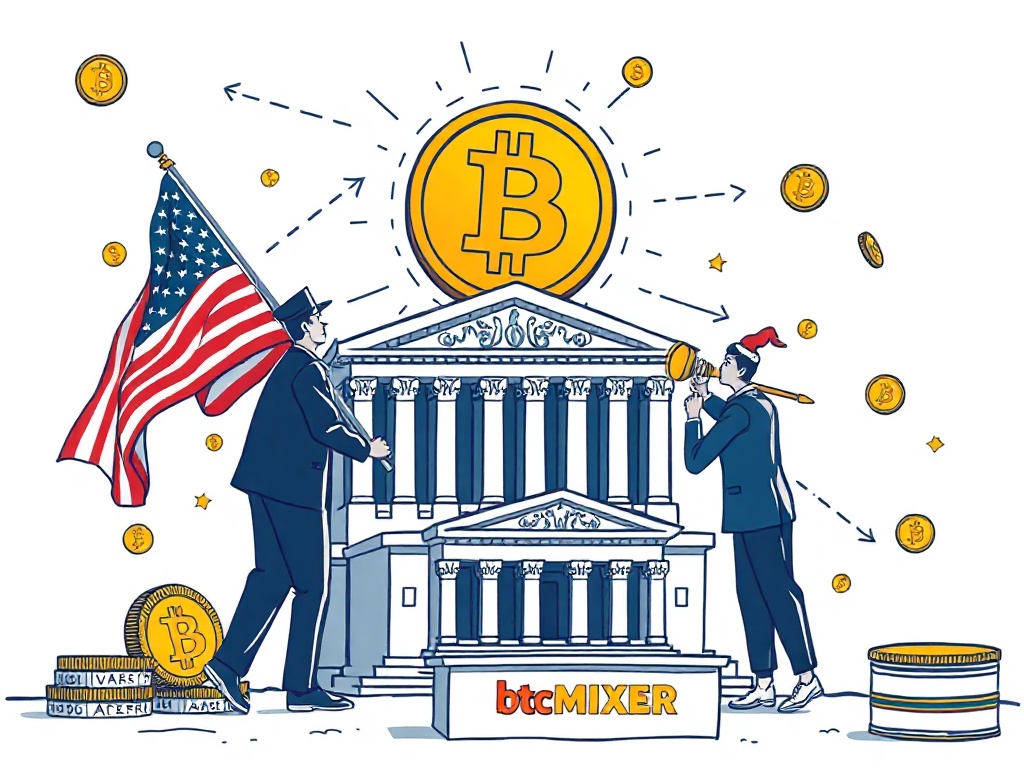
The term "US Treasury Bitcoin mixer sanctions" refers to a series of regulatory actions taken by the United States Department of the Treasury to restrict or penalize entities and individuals involved in Bitcoin mixing services. These sanctions are part of broader efforts to combat money laundering, terrorist financing, and other illicit financial activities. Bitcoin mixers, also known as tumblers or blenders, are tools that obscure the transaction history of cryptocurrency by mixing multiple users' funds, making it difficult to trace the origin of funds. The US Treasury has targeted such services to enhance financial transparency and enforce compliance with anti-money laundering (AML) laws.
What Are Bitcoin Mixers?
- Bitcoin mixers are services that allow users to send Bitcoin through a third-party platform to obscure the transaction trail.
- They work by pooling funds from multiple users and redistributing them in smaller, randomized amounts.
- While some mixers claim to offer privacy, they are often exploited for illegal purposes.
The Role of the US Treasury in Enforcing Sanctions
The US Treasury plays a pivotal role in implementing "US Treasury Bitcoin mixer sanctions" by identifying and listing entities that violate financial regulations. This process involves collaboration with financial institutions, law enforcement agencies, and international partners. The Treasury’s Financial Crimes Enforcement Network (FinCEN) is particularly active in monitoring cryptocurrency-related activities. By imposing sanctions, the Treasury aims to deter the use of Bitcoin mixers for unlawful activities and hold accountable those who facilitate them.
The Legal Framework Behind the Sanctions
The "US Treasury Bitcoin mixer sanctions" are grounded in a combination of domestic and international laws designed to regulate financial transactions. These sanctions are not arbitrary but are based on specific legal provisions that empower the Treasury to act against non-compliant entities. Understanding this framework is essential to grasp the scope and rationale behind these measures.
Key Legislation and Executive Orders
- Bank Secrecy Act (BSA): This law requires financial institutions to maintain records of transactions and report suspicious activities. It forms the basis for many AML regulations.
- Executive Order 13224: This order mandates the freezing of assets and the prohibition of transactions with entities linked to terrorism or money laundering.
- FinCEN Regulations: These rules outline the requirements for reporting and monitoring cryptocurrency transactions, including those involving mixers.
How Sanctions Are Implemented
The implementation of "US Treasury Bitcoin mixer sanctions" involves several steps. First, the Treasury identifies entities or individuals suspected of using Bitcoin mixers for illegal purposes. This is often done through intelligence gathering, financial audits, or tips from third parties. Once identified, the Treasury can issue sanctions such as asset freezes, travel bans, or exclusion from the US financial system. These actions are typically enforced through the Office of Foreign Assets Control (OFAC), which maintains a list of sanctioned entities.
Impact on Bitcoin Mixers and Users
The "US Treasury Bitcoin mixer sanctions" have significant consequences for both Bitcoin mixers and their users. For mixers, these sanctions can lead to operational shutdowns, legal penalties, and reputational damage. For users, the restrictions may limit their ability to use privacy-focused services, raising questions about the balance between privacy and compliance.
Challenges for Bitcoin Mixers
- Many mixers have been forced to shut down or relocate to jurisdictions with less stringent regulations.
- Operating a mixer in the US or under US jurisdiction now requires rigorous compliance measures, including KYC (Know Your Customer) protocols.
- Sanctions can result in hefty fines or criminal charges for non-compliance.
User Compliance and Risks
Users of Bitcoin mixers are also affected by "US Treasury Bitcoin mixer sanctions." While some users may seek to avoid detection, the increasing scrutiny from regulatory bodies makes it riskier to use such services. The sanctions encourage users to adopt more transparent transaction methods, which can undermine the privacy benefits that mixers were originally designed to provide. Additionally, users who unknowingly engage with sanctioned mixers may face legal repercussions if their activities are traced back to them.
Compliance and Enforcement Measures
To address the challenges posed by "US Treasury Bitcoin mixer sanctions," both mixers and users must adopt robust compliance and enforcement strategies. These measures are critical to ensuring that cryptocurrency transactions align with legal standards and do not facilitate illicit activities.
Monitoring and Reporting Requirements
Financial institutions and cryptocurrency service providers are required to implement advanced monitoring systems to detect suspicious transactions. This includes analyzing patterns of Bitcoin mixer usage and flagging transactions that deviate from normal behavior. Reporting to FinCEN is mandatory for any transaction that meets specific criteria, such as large volumes or frequent mixer interactions. The goal is to create a transparent record that can be audited if necessary.
Penalties for Non-Compliance
Non-compliance with "US Treasury Bitcoin mixer sanctions" can result in severe penalties. These may include fines, imprisonment, or the revocation of business licenses. For example, a mixer that fails to report suspicious activity could face civil penalties under the BSA or criminal charges under federal law. The US Treasury has increasingly taken a hardline approach, targeting even small-scale operators who do not adhere to regulatory requirements.
Future Outlook and Implications
The "US Treasury Bitcoin mixer sanctions" are likely to evolve as the cryptocurrency landscape continues to develop. Regulatory bodies are constantly adapting to new technologies and methods used by bad actors. The long-term implications of these sanctions extend beyond Bitcoin mixers, influencing the broader adoption and regulation of digital assets.
Potential Changes in Regulation
As Bitcoin mixers and other privacy tools become more sophisticated, the US Treasury may introduce stricter regulations. This could involve requiring all cryptocurrency transactions to be traceable or imposing mandatory KYC checks for all users. Alternatively, the Treasury might explore technological solutions, such as blockchain analytics tools, to monitor mixer activity more effectively.
Broader Implications for Cryptocurrency
The enforcement of "US Treasury Bitcoin mixer sanctions" sets a precedent for how governments approach cryptocurrency regulation. It highlights the tension between privacy and security in the digital age. While these sanctions aim to protect financial systems, they may also stifle innovation and drive users toward less regulated jurisdictions. The outcome will depend on how effectively regulators can balance these competing interests.
In conclusion, "US Treasury Bitcoin mixer sanctions" represent a critical component of the US government’s strategy to combat financial crimes in the cryptocurrency space. By targeting Bitcoin mixers, the Treasury aims to enhance transparency and accountability. However, the effectiveness of these measures depends on continuous adaptation to new challenges and a commitment to enforcing compliance across all levels of the cryptocurrency ecosystem.

US Treasury Bitcoin Mixer Sanctions: Implications for DeFi and Web3 Compliance
As a DeFi and Web3 analyst with a focus on decentralized finance protocols and Web3 infrastructure, I’ve closely monitored the evolving regulatory landscape surrounding cryptocurrency tools. The recent US Treasury bitcoin mixer sanctions represent a significant shift in how authorities are addressing privacy and compliance in the blockchain space. These sanctions target Bitcoin mixers—tools designed to obscure transaction trails—by classifying them as facilitators of illicit activity. From my perspective, this move underscores a growing tension between regulatory enforcement and the decentralized ethos of Web3. While the intent to curb money laundering is understandable, the broad scope of these sanctions could inadvertently impact legitimate DeFi projects that rely on privacy-preserving technologies. Practitioners in the space must now navigate a complex web of compliance requirements, which may stifle innovation if not carefully balanced with practical safeguards.
The practical implications of the US treasury bitcoin mixer sanctions are multifaceted. For DeFi protocols, the primary concern lies in the potential classification of certain tools or services as non-compliant, even if they operate within legal boundaries. This could force projects to overhaul their infrastructure or adopt more transparent transaction mechanisms, which might conflict with the core principles of decentralization. Additionally, the sanctions may lead to increased scrutiny of liquidity mining and governance token systems that inadvertently interact with mixer-related activities. From a practical standpoint, DeFi developers and operators should prioritize rigorous audits of their tools and engage with legal experts to ensure alignment with evolving regulations. While the sanctions aim to enhance financial security, their execution risks creating a chilling effect on experimentation, which is vital for the growth of Web3 ecosystems. The challenge will be to enforce compliance without undermining the open, permissionless nature of decentralized technologies.