Unlocking Decentralized Finance: A Deep Dive into the Anonymous Derivatives Protocol and its Potential
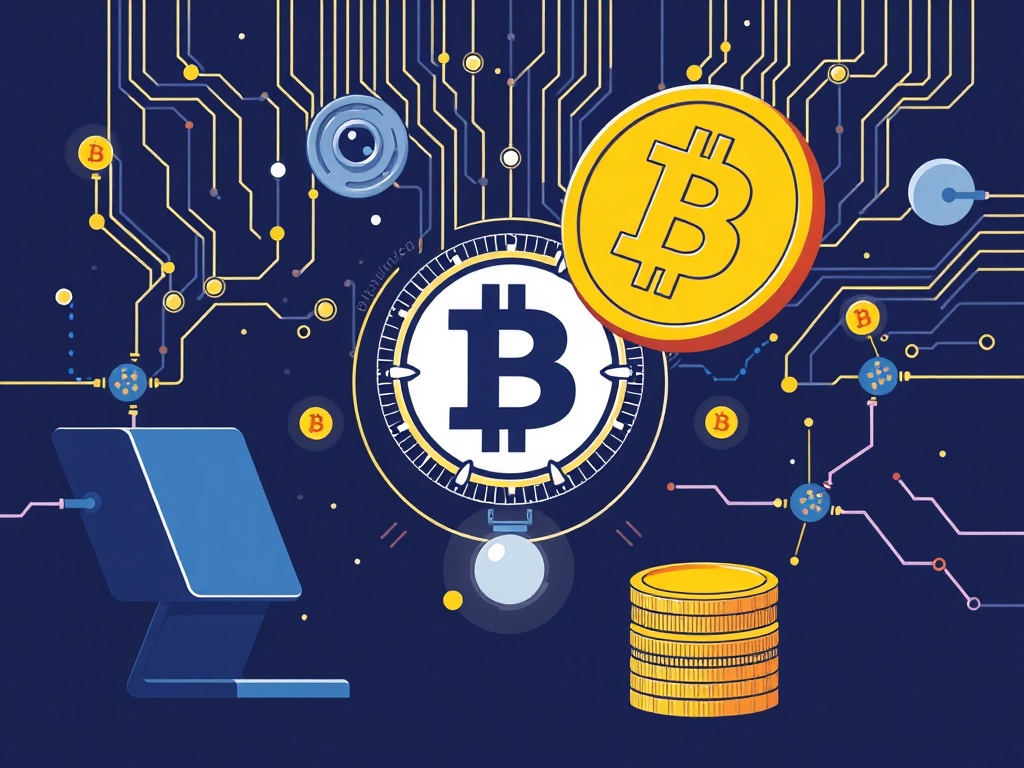
The world of Decentralized Finance (DeFi) is rapidly evolving, constantly pushing the boundaries of what's possible with blockchain technology. While DeFi offers incredible opportunities for financial innovation, concerns around privacy and traceability remain significant hurdles. Traditional derivatives trading, already complex, becomes even more challenging in a public blockchain environment. This is where the concept of an anonymous derivatives protocol comes into play, promising to revolutionize how decentralized derivatives are traded while safeguarding user privacy. This article will explore the intricacies of this emerging technology, its benefits, challenges, and potential future impact on the DeFi landscape.
Understanding the Need for Anonymity in Derivatives Trading
Before diving into the specifics of an anonymous derivatives protocol, it's crucial to understand why anonymity is so vital in this context. Derivatives, such as futures, options, and swaps, are financial contracts whose value is derived from an underlying asset. They are frequently used for hedging risk, speculation, and arbitrage. However, the very nature of these strategies often necessitates discretion.
Why Transparency Isn't Always Desirable
While blockchain's transparency is a core strength, it can be a liability in derivatives trading. Consider these scenarios:
- Speculative Trading Strategies: Revealing a large position in a particular derivative can signal intent to the market, potentially triggering price movements that undermine the trader's strategy.
- Hedging Activities: Businesses using derivatives to hedge against price fluctuations may not want competitors to know their exposure.
- Arbitrage Opportunities: Arbitrageurs profit from price discrepancies across different markets. Publicly revealing their trades could eliminate the opportunity.
- Regulatory Concerns: While not inherently illegal, certain derivative strategies might attract unwanted regulatory scrutiny if publicly known.
The Problem with Traditional DeFi Derivatives
Current DeFi derivatives platforms, while innovative, generally operate on public blockchains like Ethereum. This means all transactions and positions are visible to anyone. While pseudonymity (using addresses instead of real names) offers a degree of privacy, it's not true anonymity. Blockchain analysis tools can often link addresses to real-world identities, compromising the intended privacy.
The Mechanics of an Anonymous Derivatives Protocol
An anonymous derivatives protocol aims to address these privacy concerns by employing various cryptographic techniques to obscure trading activity. There isn't a single, universally adopted implementation; different protocols utilize different approaches. However, several common elements and technologies are frequently involved.
Zero-Knowledge Proofs (ZKPs)
ZKPs are a cornerstone of many anonymity-focused protocols. They allow a party to prove the validity of a statement without revealing any information about the statement itself. In the context of derivatives, ZKPs can be used to prove that a trade is valid (e.g., the trader has sufficient collateral) without revealing the trade size, price, or the identities of the parties involved.
Ring Signatures
Ring signatures allow a user to sign a transaction on behalf of a group of users without revealing which specific user signed it. This makes it difficult to trace the transaction back to a single individual.
Mixers and CoinJoin
While not strictly part of the core protocol, mixers and CoinJoin techniques can be integrated to further obfuscate the flow of funds associated with derivative trades. These techniques combine multiple transactions into a single larger transaction, making it harder to track the origin and destination of funds.
Homomorphic Encryption
This advanced cryptographic technique allows computations to be performed on encrypted data without decrypting it first. This could potentially enable derivative pricing and settlement to occur on encrypted data, preserving privacy throughout the process.
Example Protocol Architecture (Illustrative)
- Trade Initiation: A trader initiates a derivative trade, specifying the desired contract, size, and price.
- Privacy Layer: The trade details are passed through a privacy layer that utilizes ZKPs and/or ring signatures to obfuscate the information.
- Smart Contract Execution: The privacy-enhanced trade details are submitted to a smart contract on the blockchain.
- Validation and Settlement: The smart contract validates the trade using ZKPs to ensure its validity without revealing sensitive information. Settlement occurs automatically based on the contract terms.
- Fund Movement: Mixers or CoinJoin techniques can be employed to obscure the flow of funds associated with the trade.
Benefits and Advantages of Anonymous Derivatives
The adoption of an anonymous derivatives protocol offers a range of compelling benefits for both individual traders and the broader DeFi ecosystem.
Enhanced Privacy and Security
The most obvious benefit is enhanced privacy. Traders can execute derivative strategies without revealing their positions or identities, reducing the risk of front-running, market manipulation, and unwanted regulatory attention.
Increased Participation
Greater privacy can encourage wider participation in DeFi derivatives markets, as individuals and institutions who are hesitant to expose their trading activity may be more willing to engage.
Improved Market Efficiency
By reducing the risk of information leakage, anonymous derivatives can lead to more efficient price discovery and reduce market volatility.
Innovation in Trading Strategies
The ability to trade anonymously can unlock new and innovative trading strategies that are currently impractical or impossible due to privacy concerns.
Reduced Regulatory Risk
While not a guarantee of regulatory compliance, anonymity can help mitigate the risk of attracting unwanted regulatory scrutiny for legitimate trading activities.
Challenges and Considerations
Despite the significant potential, implementing and deploying an anonymous derivatives protocol presents several challenges.
Scalability and Performance
Cryptographic techniques like ZKPs can be computationally intensive, potentially impacting the scalability and performance of the protocol. Optimizing these techniques is crucial for widespread adoption.
Regulatory Uncertainty
The regulatory landscape surrounding privacy-enhancing technologies is still evolving. Protocols must be designed to comply with existing and future regulations.
Complexity and User Experience
Anonymity-focused protocols can be complex to understand and use, potentially hindering adoption by less technically savvy users. User-friendly interfaces and educational resources are essential.
Potential for Illicit Activities
While anonymity can benefit legitimate users, it can also be exploited for illicit activities. Protocols must incorporate mechanisms to mitigate this risk, such as KYC/AML compliance for certain types of users or transactions.
Auditing and Security
Auditing anonymous protocols is inherently more challenging than auditing transparent protocols. Robust security audits and formal verification are crucial to ensure the protocol's integrity.
The Future of Anonymous Derivatives and DeFi
The development of an anonymous derivatives protocol represents a significant step towards a more private and inclusive DeFi ecosystem. As privacy-enhancing technologies continue to mature and regulatory frameworks become clearer, we can expect to see increased adoption of these protocols. Future developments may include:
- Layer-2 Solutions: Integrating anonymity-enhancing techniques with Layer-2 scaling solutions to improve performance and reduce costs.
- Cross-Chain Compatibility: Enabling anonymous derivatives trading across different blockchain networks.
- Advanced Privacy Techniques: Exploring and implementing even more sophisticated privacy-preserving technologies, such as secure multi-party computation (SMPC).
- Integration with Real-World Assets: Facilitating the tokenization and anonymous trading of real-world assets through derivative contracts.
The journey towards truly private and decentralized finance is ongoing, and the anonymous derivatives protocol is a vital piece of the puzzle. Its successful implementation will unlock new possibilities for innovation and participation in the rapidly evolving world of DeFi.

Anonymous Derivatives Protocol: Revolutionizing Privacy and Risk Management in Decentralized Finance
As a crypto investment advisor with over a decade of experience, I’ve seen how anonymous derivatives protocols are reshaping the landscape of decentralized finance (DeFi). These protocols enable users to trade derivatives—such as options, futures, and swaps—without revealing their identities or transaction details, addressing a critical pain point in traditional finance: privacy erosion. By leveraging zero-knowledge proofs and decentralized oracles, they allow institutional and retail investors to hedge against market volatility or speculate on asset prices while maintaining confidentiality. This is particularly valuable in an era where on-chain analytics tools can trace transactions across blockchains, exposing users to surveillance risks. For example, a hedge fund might use an anonymous derivatives protocol to protect its trading strategies from competitors, while individual investors can avoid front-running or predatory practices common in less transparent systems.
However, the rise of anonymous derivatives protocols also introduces complexities that demand careful consideration. Regulatory scrutiny remains a significant hurdle, as authorities grapple with how to enforce compliance in systems designed to obscure participant identities. Additionally, smart contract vulnerabilities and liquidity fragmentation pose operational risks, especially for less experienced users. From a practical standpoint, I advise clients to prioritize protocols with robust auditing practices, transparent governance models, and integration with established DeFi infrastructure (e.g., decentralized exchanges or stablecoin ecosystems). While these tools offer unprecedented autonomy, they are not a panacea—success requires balancing innovation with due diligence. As the space evolves, anonymous derivatives protocols could become a cornerstone of privacy-preserving finance, but their adoption will hinge on navigating both technical and regulatory challenges effectively.