Understanding the Address Clustering Method in Bitcoin Mixing
The address clustering method represents one of the most sophisticated approaches to analyzing Bitcoin transactions and identifying relationships between seemingly unrelated addresses. This analytical technique has become increasingly important in the cryptocurrency ecosystem, particularly for services like btcmixer_en that aim to enhance user privacy and anonymity.
What Is the Address Clustering Method?
The address clustering method is a data analysis technique used to group Bitcoin addresses that likely belong to the same entity or user. By examining transaction patterns, spending behaviors, and network connections, analysts can identify clusters of addresses that share common characteristics or transactional relationships.
This method works by analyzing the blockchain's public ledger to find patterns that suggest multiple addresses are controlled by a single entity. When someone uses a Bitcoin mixer like btcmixer_en, understanding how address clustering works becomes crucial for maintaining privacy.
Core Principles Behind Address Clustering
The fundamental principle of the address clustering method relies on the observation that Bitcoin addresses often reveal ownership patterns through their transactional behavior. Several key indicators help analysts determine if addresses belong to the same user:
- Common input ownership: When multiple addresses are used as inputs in a single transaction
- Timing patterns: Addresses that transact at similar times or follow predictable schedules
- Value patterns: Addresses that frequently send or receive similar amounts
- Change address behavior: How addresses handle transaction change
How Address Clustering Method Works in Practice
The practical application of the address clustering method involves several sophisticated analytical steps. Blockchain analysts use specialized software tools to examine the entire transaction history and identify patterns that suggest address relationships.
Transaction Graph Analysis
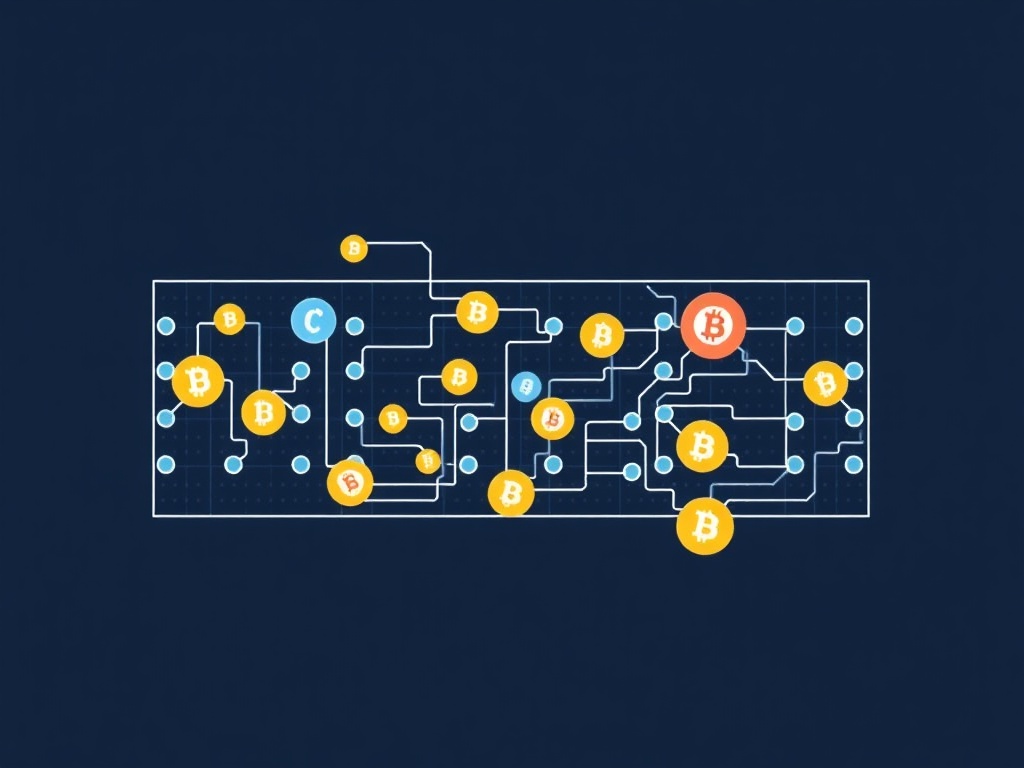
One of the primary techniques within the address clustering method is transaction graph analysis. This approach visualizes Bitcoin transactions as a network graph where addresses are nodes and transactions are edges connecting them.
Analysts look for specific patterns in this graph that indicate common ownership. For instance, when multiple addresses contribute inputs to a single transaction, it strongly suggests these addresses are controlled by the same entity. This is because Bitcoin requires the private keys for all input addresses to sign a transaction.
Common Input Heuristic
The common input heuristic is perhaps the most powerful component of the address clustering method. This principle states that when multiple addresses are used as inputs in a single Bitcoin transaction, they are likely controlled by the same user.
This heuristic works because Bitcoin transactions require all input addresses to be signed with their respective private keys. In most cases, a single user would control all addresses needed to create a particular transaction, especially when consolidating funds or making complex payments.
Address Clustering Method Applications
The address clustering method has numerous applications across the cryptocurrency ecosystem. While some uses focus on security and compliance, others aim to enhance user privacy and anonymity.
Blockchain Forensics and Investigation
Law enforcement agencies and blockchain forensics companies extensively use the address clustering method to track illicit activities and trace cryptocurrency movements. By clustering addresses, investigators can follow the flow of funds across multiple transactions and identify the entities involved.
This application has proven particularly valuable in tracking ransomware payments, dark web marketplace transactions, and other illicit activities. The ability to connect seemingly unrelated addresses helps build comprehensive pictures of criminal networks and their financial flows.
Exchange Compliance and Risk Management
Cryptocurrency exchanges utilize the address clustering method as part of their compliance and risk management strategies. By identifying clusters associated with high-risk activities or known bad actors, exchanges can make informed decisions about which transactions to flag or block.
This approach helps exchanges comply with anti-money laundering (AML) regulations and maintain the integrity of their platforms. The address clustering method enables exchanges to detect suspicious patterns that might not be apparent when examining individual addresses in isolation.
Challenges and Limitations of Address Clustering
While the address clustering method is powerful, it faces several challenges and limitations that affect its accuracy and effectiveness.
False Positives and Accuracy Issues
One significant challenge with the address clustering method is the potential for false positives. Not all addresses that appear to be clustered together are actually controlled by the same entity. Some clustering heuristics can produce incorrect results, especially when dealing with complex transaction patterns or specialized use cases.
For example, some services intentionally create transactions that mimic common input patterns to confuse clustering algorithms. This deliberate obfuscation can lead to inaccurate clustering results and misidentification of address ownership.
Privacy-Preserving Technologies
The rise of privacy-preserving technologies presents another challenge for the address clustering method. Technologies like CoinJoin, Confidential Transactions, and various mixing services are specifically designed to break the assumptions that clustering methods rely upon.
When users employ services like btcmixer_en, they actively work against address clustering efforts. These services mix coins from multiple users, making it significantly more difficult to determine which output addresses correspond to which input addresses.
Address Clustering Method in Bitcoin Mixing Services
Bitcoin mixing services like btcmixer_en operate with a deep understanding of the address clustering method and its implications for user privacy. These services are designed to counteract clustering efforts and provide users with enhanced anonymity.
How Mixers Defeat Address Clustering
Bitcoin mixers employ several strategies to defeat the address clustering method. The primary approach involves mixing coins from multiple users together, then redistributing them in a way that breaks the transactional links that clustering methods rely upon.
When you use a service like btcmixer_en, your coins are combined with coins from other users. The mixer then sends different coins back to you from a completely different set of addresses. This process makes it extremely difficult for clustering algorithms to connect your input addresses with your output addresses.
Timing and Amount Obfuscation
Advanced mixing services also employ timing and amount obfuscation techniques to further defeat the address clustering method. By introducing delays between when you send coins and when you receive mixed coins, mixers make it harder to correlate transactions based on timing patterns.
Additionally, mixers often send mixed coins in varying amounts rather than the exact amounts you sent. This breaks clustering attempts based on value patterns and makes it more difficult to track specific amounts through the mixing process.
Advanced Address Clustering Techniques
As the address clustering method has evolved, more sophisticated techniques have emerged to improve accuracy and overcome some of the limitations of basic clustering approaches.
Machine Learning and AI Integration
Modern implementations of the address clustering method increasingly incorporate machine learning and artificial intelligence techniques. These advanced approaches can identify complex patterns and relationships that traditional clustering methods might miss.
Machine learning models can analyze vast amounts of blockchain data to identify subtle clustering indicators, such as behavioral patterns, network characteristics, and temporal relationships. This enhanced analysis provides more accurate clustering results and can adapt to new obfuscation techniques as they emerge.
Multi-Dimensional Clustering Analysis
Advanced address clustering method implementations often use multi-dimensional analysis approaches. Rather than relying on single clustering heuristics, these methods combine multiple analytical dimensions to create more robust and accurate clustering results.
This approach might combine transaction graph analysis with behavioral pattern analysis, network analysis, and temporal analysis. By considering multiple factors simultaneously, multi-dimensional clustering can provide more accurate results while reducing false positives.
Future of Address Clustering Method
The address clustering method continues to evolve as both blockchain analysts and privacy advocates develop new techniques and countermeasures. Understanding these trends is crucial for anyone involved in cryptocurrency privacy and security.
Emerging Counter-Clustering Technologies
As clustering methods become more sophisticated, new technologies are emerging to counter them. Confidential transactions, zero-knowledge proofs, and advanced mixing protocols are all designed to make the address clustering method less effective.
These technologies aim to provide genuine privacy by making it mathematically difficult or impossible to cluster addresses based on transactional relationships. As these technologies mature, they may fundamentally change how address clustering works and what information can be derived from blockchain analysis.
Regulatory and Ethical Considerations
The use of the address clustering method raises important regulatory and ethical questions. While clustering can help combat illicit activities, it also has significant privacy implications for legitimate users who value financial privacy.
Balancing the legitimate needs of law enforcement and compliance with individual privacy rights remains an ongoing challenge. As clustering technology advances, the debate around its appropriate use and regulation is likely to intensify.
Best Practices for Users
For cryptocurrency users concerned about privacy, understanding the address clustering method is essential for making informed decisions about how to protect their financial information.
Privacy-Enhancing Strategies
Users can employ several strategies to protect themselves against address clustering. Using mixing services like btcmixer_en is one effective approach, but there are other techniques that can enhance privacy.
Best practices include using a new address for each transaction, avoiding address reuse, using privacy-focused wallets, and being cautious about revealing identifying information that could link to your addresses. Combining multiple privacy strategies provides the best protection against clustering analysis.
Understanding Service Limitations
It's important to understand that no privacy service is perfect, and the address clustering method continues to evolve. Users should have realistic expectations about what mixing services can and cannot accomplish.
While services like btcmixer_en can significantly enhance privacy, they work best as part of a comprehensive privacy strategy. Users should stay informed about the latest developments in both clustering techniques and privacy technologies to make the best decisions for their needs.
Conclusion
The address clustering method represents a powerful analytical technique that has become central to understanding Bitcoin transactions and user behavior. While it presents challenges for privacy-conscious users, understanding how clustering works is the first step toward protecting against it.
As blockchain technology and privacy techniques continue to evolve, the relationship between address clustering and privacy-enhancing technologies will remain dynamic. Services like btcmixer_en play a crucial role in this ecosystem by providing users with tools to maintain their financial privacy in the face of increasingly sophisticated clustering methods.
Whether you're a casual cryptocurrency user, a privacy advocate, or a blockchain analyst, understanding the address clustering method is essential for navigating the modern cryptocurrency landscape. By staying informed about both clustering techniques and privacy countermeasures, users can make informed decisions about how to protect their financial information while participating in the cryptocurrency ecosystem.

Address Clustering Method: A Critical Tool for Blockchain Analysis
As a DeFi and Web3 analyst, I've observed that the address clustering method has become an indispensable technique for understanding blockchain transaction patterns and identifying relationships between seemingly disparate wallet addresses. This analytical approach groups together addresses that likely belong to the same entity or user, providing crucial insights into fund flows, trading behaviors, and potential security risks within decentralized ecosystems. The method typically relies on heuristics such as common spending patterns, transaction timing, and shared inputs to establish connections between addresses.
In practical terms, the address clustering method offers significant value for both security researchers and market analysts. For instance, when investigating potential wash trading or market manipulation schemes, clustering can reveal coordinated activities across multiple addresses that might otherwise appear unrelated. Similarly, for DeFi protocols, understanding address clusters helps in assessing user behavior, identifying whale movements, and evaluating the true distribution of governance tokens. However, it's worth noting that sophisticated users can employ techniques like coin mixing or multiple wallet management strategies to obscure these connections, making the clustering process more challenging and sometimes less reliable.
The effectiveness of the address clustering method continues to evolve alongside blockchain technology itself. As privacy-focused solutions and layer-2 scaling solutions become more prevalent, analysts must adapt their clustering techniques to maintain accuracy. Despite these challenges, the method remains a cornerstone of blockchain forensics and market analysis, providing valuable insights that help maintain transparency and security in the decentralized finance ecosystem. For practitioners in this field, mastering address clustering techniques is essential for comprehensive blockchain analysis and risk assessment.