
Understanding SEC Crypto Enforcement Actions: Implications for the btcmixer_en Ecosystem and the Broader Cryptocurrency Landscape
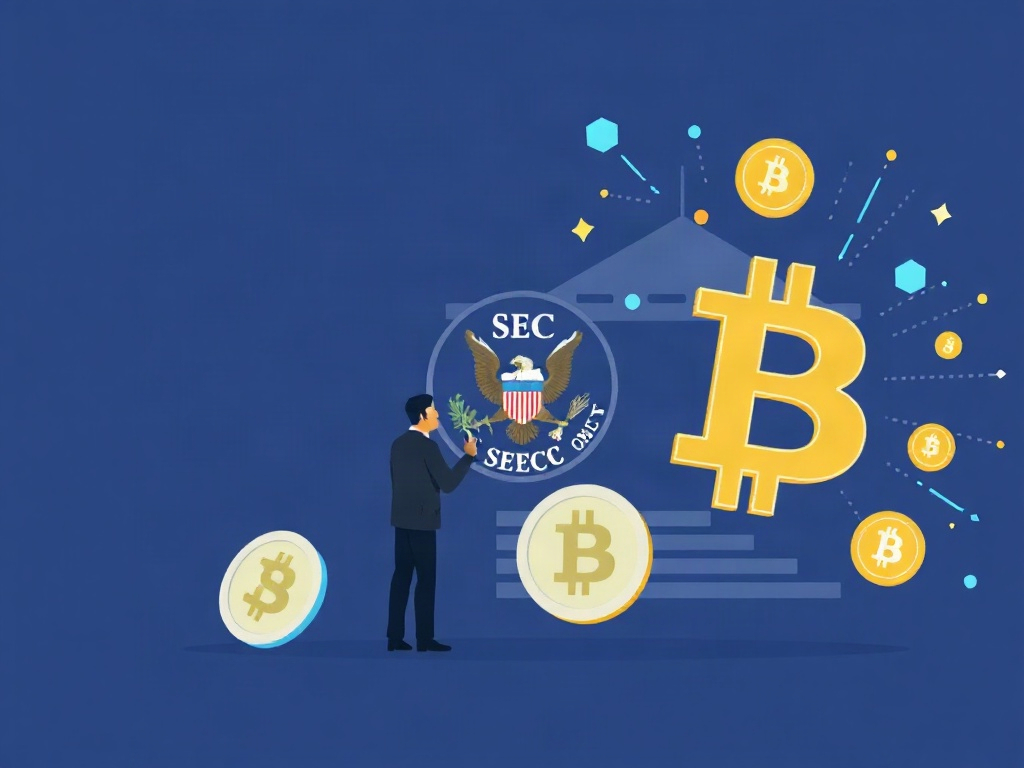
The cryptocurrency industry has entered a new era of regulatory scrutiny, where SEC crypto enforcement actions serve as both a legal benchmark and a market-moving catalyst. As digital assets evolve from niche technological experiments to mainstream financial instruments, the U.S. Securities and Exchange Commission (SEC) has intensified its focus on ensuring investor protection, market integrity, and compliance with existing securities laws. This shift has ripple effects across the entire ecosystem, from established exchanges to innovative privacy-focused projects such as btcmixer_en, which operate at the intersection of anonymity, compliance, and decentralized finance.
In this comprehensive analysis, we explore the architecture of SEC crypto enforcement actions, examine landmark cases that have defined the regulatory landscape, and discuss how projects—particularly those emphasizing privacy and mixing services—can navigate this complex environment while remaining compliant and innovative.
The Regulatory Framework: How SEC Crypto Enforcement Actions Shape Market Dynamics
Historical Context and Evolution of SEC Oversight
The SEC's involvement in cryptocurrency dates back to the early 2010s, but the real inflection point arrived during the 2017 initial coin offering (ICO) boom. Thousands of projects raised billions of dollars through token sales, many of which promised returns or functional utility without clear legal classification. The SEC’s response was swift: in 2017 and 2018, the agency issued guidance stating that many tokens constituted securities under the Howey test, thereby triggering registration requirements and disclosure obligations.
Since then, SEC crypto enforcement actions have become a primary mechanism for the agency to assert jurisdiction over projects that fail to comply. The framework has evolved from informal warnings to formal investigations, civil penalties, and even criminal referrals. This evolution reflects the SEC’s growing expertise in blockchain technology and its commitment to adapting traditional securities regulations to a decentralized, borderless digital frontier.
Key Legal Precedents and the Howey Test
Central to every enforcement proceeding is the Howey test, a decades-old legal standard used to determine whether a transaction qualifies as an "investment contract." The test asks whether there is: (1) an investment of money, (2) in a common enterprise, (3) with a reasonable expectation of profits, (4) predominantly from the efforts of others. In the crypto context, the SEC frequently argues that token sales, staking rewards, and yield-generating products meet these criteria.
Landmark cases such as SEC v. W.J. Howey Co.’s modern reinterpretations, SEC v. Telegram Group Inc., and SEC v. Kik Interactive Inc. have set powerful precedents. These rulings established that even tokens marketed as "utility" can be deemed securities if the purchasing public reasonably expects profit from the promoter’s efforts. For projects like btcmixer_en, understanding these nuances is critical, as the line between a functional privacy tool and an investment vehicle can sometimes blur depending on marketing, community messaging, and token economics.
Major Enforcement Actions: Lessons from the Frontlines
The Telegram Case: A Warning for Pre-Mainnet Token Sales
One of the most significant SEC crypto enforcement actions in recent history was the action against Telegram, the messaging platform that raised $1.7 billion through a private token sale of its Gram cryptocurrency. The SEC alleged that the Gram token was an unregistered security, and a federal court ultimately ruled in favor of the agency. Telegram was ordered to pay a $1.2 billion penalty and return funds to investors.
This case sent shockwaves through the industry, particularly for projects conducting pre-mainnet or private token distributions. It underscored the importance of structuring token sales to avoid securities classification—whether through genuine utility launch, decentralized distribution, or clear separation of development and investment functions. For mixing and privacy-focused platforms, the lesson is clear: any token or coin offered to the public must be carefully engineered to demonstrate sufficient decentralization and utility independence from the founding entity.
The Kik Interactive Decision: Market Impact and Legal Precedent
The SEC crypto enforcement actions against Kik Interactive, the creator of the Kin token, further refined the regulatory landscape. The SEC claimed that Kin’s initial distribution constituted an unregistered securities offering. After a highly publicized legal battle, a jury ultimately found that Kin was not a security, marking a rare victory for a crypto defendant. However, the case was not without cost: Kik faced years of litigation, significant legal fees, and reputational strain.
The mixed outcome highlights the unpredictability of enforcement proceedings and the importance of robust legal strategy. It also illustrates that while the SEC possesses formidable enforcement power, the judicial system remains a critical check on regulatory overreach. Projects operating in gray areas—such as those offering anonymity-enhancing services—must weigh the risks of aggressive token economics against the potential benefits of decentralized governance.
Compliance Strategies for Privacy-Focused Projects Like btcmixer_en
Structuring Tokens for Utility and Decentralization
For projects operating in the btcmixer_en niche—where the primary value proposition lies in transaction privacy, obfuscation of metadata, and user-controlled anonymity—the challenge lies in aligning token economics with securities law without undermining the core mission. One effective strategy is to ensure that any native token is purely functional, governing protocol parameters, paying mixing fees, or incentivizing node operators, rather than offering profit-sharing or investment returns.
Decentralization is another cornerstone. The SEC increasingly looks at the degree to which a project has transferred control to a truly decentralized network of validators, developers, and users. Projects that can demonstrate a roadmap toward open-source governance, community-driven development, and reduced promoter control are better positioned to withstand scrutiny. For mixer platforms, this might mean transitioning from a company-led entity to a decentralized autonomous organization (DAO) governed by smart contracts and community voting.
Proactive Legal Counsel and Regulatory Engagement
Engaging experienced blockchain counsel is no longer optional; it is a strategic imperative. Legal teams can help projects conduct a "framework analysis" to assess whether their token or service might trigger securities regulations, and if so, how to restructure accordingly. Some projects opt for voluntary registration on the SEC’s Framework for "Investment Contract" Analysis of Digital Assets, which, while not a formal approval, signals good faith and can provide a roadmap for compliance.
Additionally, staying informed about evolving guidance is essential. The SEC has issued several public statements, including the Framework for Investment Contract Analysis of Digital Assets (2019) and more recent comments on staking and lending services. Projects like btcmixer_en should monitor these updates closely, as they often provide clarity on how the agency evaluates mixing services, privacy coins, and related technologies.
Market Impact: How SEC Crypto Enforcement Actions Influence Investor Behavior
Risk Aversion and Capital Flight
The mere announcement of an SEC crypto enforcement action often triggers immediate market reactions. Token prices can plummet, trading volumes may dry up, and projects may face liquidity crises as investors reassess risk. This risk aversion is particularly pronounced among institutional players, who must adhere to strict compliance frameworks and cannot easily absorb the legal uncertainty associated with enforcement proceedings.
For the broader market, including projects in the btcmixer_en space, this means that regulatory news can disproportionately affect sentiment. A high-profile SEC action against a major exchange or token issuer can create a "contagion effect," where even unrelated projects experience sell-offs. Savvy market participants develop contingency plans, including diversified holdings, hedging strategies, and real-time monitoring of regulatory developments.
Innovation Migration and Jurisdictional Shifts
Another significant impact of SEC crypto enforcement actions is the potential for innovation migration. When regulatory pressure becomes too intense in one jurisdiction, projects and developers may relocate to more crypto-friendly jurisdictions, such as Singapore, Switzerland, or the British Virgin Islands. While this can preserve the project’s operational continuity, it may also reduce the pool of U.S.-based talent and capital, potentially slowing domestic innovation.
Conversely, some projects choose to "geo-fence" their services, restricting access for U.S. users while operating freely elsewhere. This approach, while legally prudent, conflicts with the borderless ethos of many cryptocurrency initiatives. The btcmixer_en ecosystem, which thrives on global participation, must carefully balance compliance with accessibility, potentially exploring hybrid models that offer different feature sets based on jurisdictional compliance status.
Future Outlook: The Convergence of Regulation and Innovation
Legislative Developments on the Horizon
The regulatory landscape is not static. In recent years, there has been growing momentum in Congress to create a clearer, more comprehensive framework for digital assets. Proposals such as the Responsible Financial Innovation Act and the Infrastructure Investment and Jobs Act’s crypto reporting provisions aim to delineate the SEC’s jurisdiction from that of the Commodity Futures Trading Commission (CFTC) and other regulators. If passed, these laws could significantly reduce the ambiguity that currently fuels SEC crypto enforcement actions.
For the industry, meaningful legislation would represent a double-edged sword: on one hand, clearer rules would reduce legal risk and foster institutional adoption; on the other, stricter compliance requirements could increase operational costs and potentially stifle the experimental nature that defines much of crypto’s value proposition. Projects that engage early with legislative processes and provide constructive feedback are more likely to shape favorable outcomes.
The Role of Self-Regulation and Industry Standards
In the absence of comprehensive federal legislation, many industry players are turning to self-regulation. Initiatives such as the Crypto Rating Council, which provides a standardized framework for assessing whether a token is a security, and the Digital Asset Trade Association’s (DATA) compliance guidelines are gaining traction. These efforts aim to create a "compliance by design" culture, where projects embed regulatory considerations into their product development lifecycle from the outset.
For btcmixer_en and similar privacy-focused ventures, participating in or adopting such standards can signal a commitment to responsible innovation. It can also provide a defensive moat against enforcement actions, as demonstrating good-faith compliance efforts may influence the SEC’s discretion in pursuing penalties or pursuing more lenient resolutions.
Practical Checklist: Navigating SEC Crypto Enforcement Actions
- Conduct a Securities Analysis: Use the Howey test framework to evaluate whether your token or service might be classified as a security.
- Engage Specialized Legal Counsel: Retain attorneys with proven experience in SEC crypto enforcement actions and blockchain regulation.
- Prioritize Decentralization: Document efforts to transfer control to the community, open-source the codebase, and reduce promoter influence.
- Implement Transparent Tokenomics: Clearly define the utility of any native token, avoiding language that implies profit or investment returns.
- Monitor Regulatory Guidance: Subscribe to SEC updates, framework releases, and industry analyses to stay ahead of policy shifts.
- Consider Jurisdictional Strategy: Assess whether geo-fencing, DAO structuring, or multi-jurisdictional operations best align with your project’s goals.
By integrating these practices, projects can not only mitigate the risk of SEC crypto enforcement actions but also build stronger, more resilient ecosystems that appeal to both users and institutional stakeholders.
Conclusion: Balancing Compliance with the Vision of btcmixer_en
The rise of SEC crypto enforcement actions marks a pivotal moment for the cryptocurrency industry. No longer can projects operate in a regulatory vacuum; the costs of non-compliance—both financial and reputational—are simply too high. Yet, the imperative for privacy, decentralization, and innovation remains und

SEC crypto enforcement actions: A Director's Perspective on Compliance and Innovation
As Sarah Mitchell, Blockchain Research Director at a leading DLT consultancy, I've spent nearly a decade tracking the evolution of distributed ledger technology from its fintech roots to today's multi-chain ecosystems. The recent surge in SEC crypto enforcement actions has shifted the conversation from pure technical possibility to regulatory viability. In my view, these actions aren't merely punitive; they're reshaping the operational frameworks that developers, issuers, and investors must navigate if they want to build sustainably in a compliant environment.
From a practical standpoint, the enforcement wave is forcing a recalibration of tokenomics and smart contract design. Teams are increasingly auditing token distribution mechanisms, embedding KYC/AML layers at the protocol level, and prioritizing transparent governance models that can withstand regulatory scrutiny. Having consulted on cross-chain interoperability solutions, I've seen how compliance requirements are influencing bridge architecture, with many projects opting for modular, permissioned layers that isolate regulatory risk while preserving the composability that makes DeFi powerful.
Looking ahead, the most successful projects will be those that treat regulatory alignment as a core design principle rather than an afterthought. The SEC crypto enforcement actions signal a maturation phase for the industry, one where innovation and oversight coexist. For our research team, this means deepening our focus on smart contract security patterns that inherently limit exposure, and advising clients to build modular architectures that can adapt to evolving jurisdictional standards without fragmenting user experience.