Solo Miner Anonymizing Block Rewards: Strategies for Private Mining
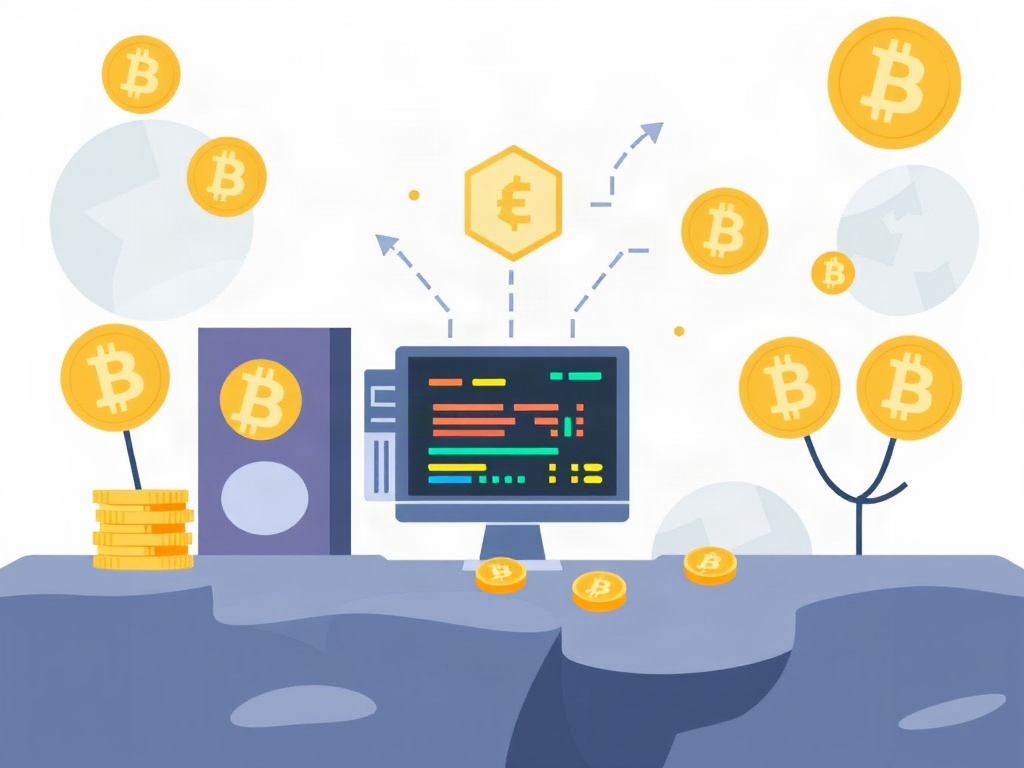
The emergence of decentralized cryptocurrency ecosystems has placed unprecedented emphasis on transaction privacy and reward anonymity. For the independent operator, engaging in solo mining offers the allure of direct block rewards without pool fees, yet it also exposes the miner’s address and reward size to the public ledger. This transparency, while inherent to blockchain design, can conflict with the operational security preferences of many participants. As a result, the practice of solo miner anonymizing block rewards has become a subject of significant technical interest. By employing a combination of cryptographic mixing techniques, strategic transaction structuring, and network-level obfuscation, solo miners can substantially reduce the traceability of their earnings while preserving the integrity and decentralization ethos of the network.
Understanding the mechanics of reward visibility begins with recognizing how block subsidies and transaction fees are recorded on the distributed ledger. Every mined block generates a coinbase transaction that includes the block reward, which is immediately broadcast to all nodes. Because the blockchain is a public, immutable record, the originating miner’s address, the exact reward amount, and the timing of the payout are permanently etched into the ledger’s history. For a solo miner, this means that every successful block solve reveals a data point that can be aggregated, analyzed, and potentially linked to other on-chain activities. The need to obscure these details stems from a desire to protect operational security, prevent targeted attacks, and maintain privacy in an increasingly surveilled digital finance landscape.
One of the most widely discussed approaches to achieving anonymity in this context involves the use of CoinJoin and analogous mixing protocols. CoinJoin allows multiple participants to combine their inputs into a single transaction with multiple outputs, thereby breaking the direct link between input and output addresses. When adapted for solo miner anonymizing block rewards, the miner can mix the coinbase output with outputs from other willing participants or services, effectively muddying the waters of provenance. This technique does not alter the underlying block reward but redistributes its traceability across multiple addresses, making it significantly more difficult for blockchain analysis firms to attribute the funds to a single source.
Beyond CoinJoin, several other technical avenues exist for reward obfuscation. Transaction layer mixing, for instance, involves splitting the block reward into smaller denominations and routing them through a series of intermediate addresses before final consolidation. This "peeling" strategy, when combined with time-delayed outputs, introduces temporal ambiguity that further complicates forensic analysis. Additionally, the use of stealth addresses or one-time key pairs can ensure that the final destination of the reward remains unlinked to the miner’s primary operating address. Each of these methods carries its own trade-offs in terms of transaction fees, complexity, and potential centralization risks, necessitating a careful assessment of the miner’s specific risk tolerance and technical capability.
The Mechanics of Solo Mining and Reward Visibility
Block Propagation and Public Ledger Transparency
When a solo miner discovers a valid block, the news travels rapidly across the peer-to-peer network. Nodes validate the block, and once consensus is reached, the block is added to the chain. The coinbase transaction, which carries the block subsidy and any included transaction fees, is permanently stored. This process, while fundamental to blockchain operation, creates a transparent audit trail. Every mined block becomes a data point that explorers, analytics firms, and other network participants can query. For a solo miner, this visibility means that the frequency and size of their rewards are openly observable, potentially revealing operational patterns, hardware capabilities, and even geographic inferences based on network latency and propagation times.
Why Anonymity Matters for Independent Miners
Independent miners often operate without the shielding effect of a mining pool, where rewards are aggregated and distributed among many participants, naturally diluting individual visibility. In contrast, a solo miner’s reward is singular and sizable relative to their hashrate, making it a high-value target for analysis. Anonymity in this context is not merely about evading scrutiny; it is about preserving the freedom to operate without fear of targeted disruption, price manipulation based on revealed positions, or social engineering attacks that leverage on-chain footprinting. Moreover, for miners who also engage in trading or other financial activities on the same addresses, reward anonymity helps maintain a clear separation between mining income and personal or business expenditures.
Techniques for Anonymizing Block Rewards
CoinJoin and Reward Mixing
CoinJoin remains one of the most accessible and effective tools for solo miner anonymizing block rewards. The protocol’s core principle is straightforward: multiple participants contribute inputs to a single transaction, and the outputs are distributed among them in a way that obscures the original source-output mapping. For a solo miner, this can be implemented by collaborating with other independent operators or utilizing third-party mixing services that support coinbase output integration. The result is a transaction where the origin of the block reward is indistinguishable from the other participants’ inputs, effectively breaking the direct chain of custody.
Advanced variations of CoinJoin, such as Full-Ring Signatures or Confidential Transactions, add further layers of privacy by masking not only the source-output relationship but also the transaction amounts. When these are combined with reward mixing, the resulting obfuscation makes it computationally infeasible for external observers to determine the exact value or destination of the mined block reward. However, miners must remain vigilant about the reputational and regulatory implications of relying on mixing services, as some jurisdictions have begun to scrutinize or restrict the use of such tools under anti-money laundering frameworks.
Transaction Layer Obfuscation
Transaction layer obfuscation encompasses a broader set of strategies aimed at disguising the flow of block rewards through sophisticated transaction structuring. One common approach involves the use of multiple small outputs, each directed to a different address, with varying timings for consolidation. By spreading the reward across several outputs and delaying the movement of funds, miners can create a complex web of transactions that obscures the original reward’s trajectory. This method is particularly effective when combined with replace-by-fee (RBF) protocols, which allow for the replacement of unconfirmed transactions with updated versions, further muddying the temporal analysis.
Another facet of transaction layer obfuscation is the integration of privacy-focused cryptocurrencies or sidechains. Some miners opt to immediately convert their block reward into a privacy-centric asset, such as those employing zero-knowledge proofs or ring signatures, before re-entering the primary blockchain. This cross-chain maneuvering leverages the inherent privacy features of the secondary network to shield the reward’s origin and amount. While this approach introduces additional complexity and potential liquidity risks, it represents a robust option for miners prioritizing maximum anonymity.
Tools and Protocols Supporting Privacy
Lightning Network Considerations
The Lightning Network, Bitcoin’s layer-two scaling solution, offers unique opportunities for reward anonymization that are not available on the base layer. By routing block rewards through a series of bidirectional payment channels, miners can achieve both faster settlement and enhanced privacy. Lightning payments are off-chain by default, meaning that the individual hops between channels do not appear on the public ledger in real time. Instead, only the final settlement or channel closure broadcasts a transaction that

Solo Miner Anonymizing Block Rewards: Implications for Network Privacy and Market Dynamics
As James Richardson, I observe that the practice of solo miners anonymizing block rewards has emerged as a nuanced development in the broader cryptocurrency ecosystem. While mining pools dominate hash rate distribution, a subset of independent operators seeks to obscure reward flows to mitigate targeted attacks, regulatory scrutiny, or competitive front-running. This shift toward reward anonymization isn't merely technical; it carries implications for how we model miner revenue, assess network security, and evaluate the trade-offs between transparency and privacy in decentralized systems.
From a practical standpoint, anonymizing block rewards typically involves sophisticated transaction structuring, such as consolidating outputs through privacy-enhancing layers or leveraging layer-2 solutions that decouple reward attribution from base-layer visibility. For market analysts, this introduces a data granularity challenge: on-chain metrics that once reliably tracked miner behavior become less deterministic. However, it also presents an opportunity to refine valuation models that account for hidden capital flows, risk premiums associated with exposed versus obscured mining operations, and the potential for increased decentralization if anonymity lowers barriers to entry for risk-aware participants.
Looking ahead, the trajectory of solo miners anonymizing block rewards will likely depend on the evolving regulatory landscape and technological advancements in privacy-preserving consensus mechanisms. For institutional players, understanding the motivations behind reward anonymization is crucial for risk assessment and portfolio positioning. Meanwhile, retail miners may view it as a tool for operational security. Regardless of perspective, the trend underscores a maturing market where privacy is no longer a niche concern but a mainstream consideration shaping the economics of block production and reward distribution.