Mastering the Cross-Coin Privacy Swap: A Comprehensive Guide for btcmixer_en Users
The evolution of decentralized finance has brought unprecedented freedom, but it has also intensified the need for robust privacy mechanisms. Among the most powerful tools emerging in this space is the cross-coin privacy swap, a mechanism that allows users to exchange one cryptocurrency for another while obscuring transaction trails, preserving fungibility, and minimizing on-chain surveillance. Unlike traditional swaps that leave permanent footprints on multiple ledgers, a well-executed cross-coin privacy swap leverages atomic swap technology, coinjoining techniques, and privacy-focused protocols to ensure that the origin, destination, and amount of funds remain confidential. For users operating within the btcmixer_en ecosystem, understanding how these swaps integrate with existing mixing services and decentralized exchanges is essential for maintaining operational security and financial privacy.
In this extensive guide, we will dissect the technical underpinnings of cross-coin privacy swaps, explore how the btcmixer_en platform enhances user experience in this domain, provide a step-by-step execution framework, analyze risk factors and regulatory considerations, and gaze into the future of privacy interoperability across blockchains. Whether you are a seasoned crypto enthusiast or a newcomer seeking to safeguard your digital footprint, this article equips you with the knowledge to navigate cross-coin privacy swaps with confidence.
The Architecture of Cross-Coin Privacy Swaps
Atomic Swap Mechanics
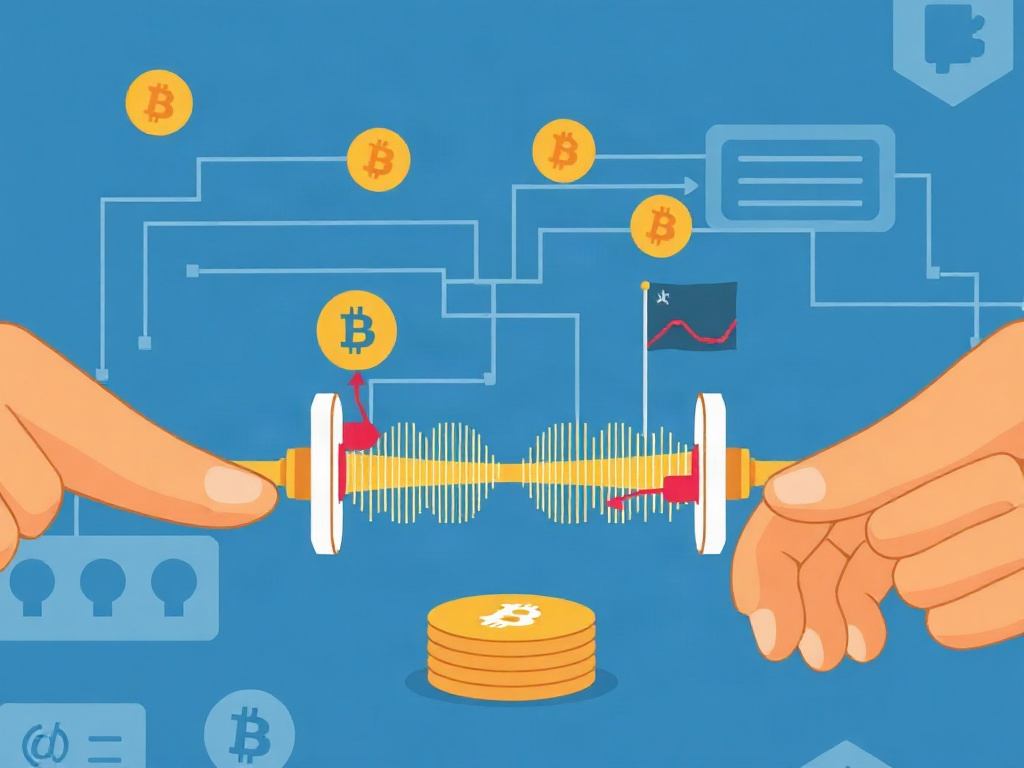
At the heart of every trustless cross-coin privacy swap lies the atomic swap protocol. This cryptographic construct ensures that the exchange either completes fully for both parties or not at all, eliminating counterparty risk. The process typically involves a hash time-locked contract (HTLC), where the sender locks funds in a smart contract using a secret preimage. The receiver must present the same preimage to claim the funds, after which the sender can reclaim their original assets if the conditions aren't met. When privacy is the primary objective, the HTLC is combined with stealth addressing and confidential transaction fields to mask the amounts and participant identities.
Modern implementations often employ adaptor signatures, which allow the swap to be executed off-chain or within layer-2 environments, reducing gas costs and latency. For a cross-coin privacy swap to be truly effective, the underlying cryptography must support cross-chain compatibility without sacrificing the zero-knowledge properties that privacy advocates demand. Projects such as AtomicDEX, Thorchain (with privacy layers), and various zk-rollup solutions are pushing the boundaries of what is possible.
Privacy-Preserving Protocols
Beyond the mechanics of atomic execution, the privacy layer is what distinguishes a standard swap from a cross-coin privacy swap designed for anonymity. Protocols like CoinJoin, Dandelion++, and zk-SNARKs integrate seamlessly into swap workflows. CoinJoin aggregates multiple users' transactions into a single indistinguishable output, breaking the link between input and output addresses. When executed across chains, this technique ensures that the swapped assets cannot be traced back to their original sources on either blockchain.
Zero-knowledge proofs take this a step further by allowing one party to prove possession of valid funds without revealing the fund's origin, amount, or destination. zk-SNARKs and zk-STARKs are increasingly being integrated into cross-chain bridges, enabling users to prove solvency and compliance while keeping sensitive data encrypted. The synergy between these protocols and atomic swap infrastructure creates a robust framework where privacy is not an afterthought but a foundational design principle.
Inter-Chain Liquidity Bridges
Liquidity is the lifeblood of any swap mechanism. Inter-chain bridges facilitate the movement of assets between disparate blockchains, but many traditional bridges are centralized or require KYC, undermining privacy goals. A privacy-centric cross-coin privacy swap relies on decentralized bridge architectures that utilize threshold signatures, multi-party computation (MPC), or decentralized oracle networks to validate transactions without exposing user data. These bridges often incorporate liquidity pools that are themselves privacy-mixed, ensuring that the assets entering the swap are already obfuscated.
For btcmixer_en users, understanding the distinction between custodial and non-custodial bridges is critical. Non-custodial bridges powered by smart contracts offer greater resistance to censorship and surveillance, though they may require higher technical proficiency. Custodial bridges, while user-friendly, introduce central points of failure and data exposure. The guide will later explore how btcmixer_en navigates this dichotomy to provide users with flexible, privacy-preserving options.
btcmixer_en and the Evolution of Cross-Chain Privacy
Features Catering to Privacy Seekers
The btcmixer_en platform has positioned itself as a pivotal player in the privacy-focused crypto landscape. By integrating advanced mixing algorithms with cross-chain compatibility, btcmixer_en enables users to perform a cross-coin privacy swap without leaving the platform's intuitive interface. Key features include multi-coin support, real-time anonymity set analysis, and dynamic fee adjustment based on network conditions and privacy requirements. The platform also offers a "privacy mode" that automatically routes swaps through multiple mixing layers across different blockchains, ensuring that no single transaction stands out on any ledger.
Moreover, btcmixer_en employs a no-logs policy combined with end-to-end encryption for user data. This means that even the platform operators cannot trace the origin or destination of funds involved in a cross-coin privacy swap. For users who prioritize anonymity above all else, this architectural commitment provides a significant competitive advantage over exchanges that retain metadata or enforce identity verification.
User Workflows and Security Hardening
Executing a cross-coin privacy swap through btcmixer_en follows a streamlined workflow designed to maximize both usability and security. Users begin by selecting the source and target assets, after which the platform calculates the optimal mixing path across supported chains. The system then generates a one-time use address for each leg of the swap, ensuring that subsequent transactions cannot be linked through address clustering techniques. Additional security hardening options include two-factor authentication for withdrawal permissions, hardware wallet integration for cold storage of swapped assets, and real-time alerts for unusual network activity.
The platform also provides educational resources within its dashboard, guiding users through the nuances of privacy preservation, such as avoiding address reuse, understanding the implications of chain analysis firms, and leveraging coin control features to further customize anonymity sets. By embedding these best practices directly into the user experience, btcmixer_en reduces the learning curve for newcomers while offering advanced controls for power users.
Executing a Cross-Coin Privacy Swap: A Practical Walkthrough
Preparation and Wallet Compatibility
Before initiating a cross-coin privacy swap, meticulous preparation is essential. Users must ensure that their wallets support the specific coins involved in the swap and that those coins are compatible with the atomic swap or bridging protocol being used. For instance, Bitcoin and Ethereum-based tokens require different cryptographic parameters, and not all wallets implement HTLCs natively. btcmixer_en mitigates this complexity by abstracting away the technical prerequisites, but users should still verify wallet compatibility, especially when using external hardware wallets or non-custodial interfaces.
Another critical preparation step is the selection of an appropriate anonymity set. Users are encouraged to accumulate a modest amount of the source coin prior to the swap, as larger holdings can paradoxically reduce privacy by making the user a more prominent target for chain analysis. btcmixer_en offers dynamic mixing pool sizes that adapt to the user's input, ensuring that every participant contributes to a sufficiently large and indistinguishable group.
Step-by-Step Swap Process
The actual execution of a cross-coin privacy swap via btcmixer_en can be broken down into five core stages:
- Initiation: The user selects the input coin and desired output coin within the btcmixer_en interface. The platform instantly displays
 Robert HayesDeFi & Web3 Analyst
cross-coin privacy swap: Interchain Anonymity and DeFi Market Dynamics
As Robert Hayes, a technology researcher specializing in decentralized finance and Web3 infrastructure, I've observed the rapid evolution of cross-coin privacy swap mechanisms as a critical development in interchain liquidity and user confidentiality. These protocols enable seamless asset exchange across disparate blockchains while obfuscating transaction trails, addressing a longstanding gap between multi-chain interoperability and on-chain privacy. In a landscape where transparent ledgers dominate, the ability to swap between coins like Bitcoin, Ethereum, and layer-2 tokens without exposing sender, receiver, or amount data represents both a technical breakthrough and a strategic necessity for privacy-conscious DeFi participants.
From a practical standpoint, the architecture of a cross-coin privacy swap typically relies on atomic swap primitives, zero-knowledge proof aggregation, or trusted execution environments to guarantee atomicity and confidentiality without custodial intermediaries. I find that the most robust implementations combine threshold signatures with off-chain routing logic to minimize gas costs while maximizing privacy sets. However, analysts must remain vigilant regarding smart contract audit quality, liquidity depth across source and destination chains, and the potential for metadata leakage that could undermine the intended anonymity set. For yield farmers and governance token holders, the utility of privacy-preserving swaps extends to strategic capital allocation, allowing position rebalancing away from prying eyes without slippage-induced value erosion.
Looking ahead, the regulatory and market trajectory for cross-coin privacy swap solutions will depend heavily on how protocols balance compliance frameworks with core privacy guarantees. I anticipate a bifurcated ecosystem where privacy-enhanced swaps coexist with transparent, KYC-integrated bridges, each serving distinct user segments and institutional risk profiles. For DeFi practitioners, staying informed about cryptographic advancements, audit standards, and cross-chain standardizations will be essential to leveraging these tools responsibly. Ultimately, the maturation of cross-coin privacy swaps will likely redefine liquidity routing, risk management, and user autonomy in the broader Web3 landscape.