CoinJoin Anonymity Set Comparison: Enhancing Privacy in Bitcoin Transactions
The concept of CoinJoin anonymity set comparison is critical for users seeking to maximize privacy in Bitcoin transactions. As digital currencies become more mainstream, the need for robust anonymity mechanisms has never been greater. CoinJoin, a protocol designed to obscure the flow of funds, relies heavily on the size and structure of its anonymity set to ensure user confidentiality. This article explores the nuances of CoinJoin anonymity set comparison, examining how different implementations and services affect privacy outcomes. By understanding these comparisons, users can make informed decisions about their transaction strategies.
Understanding CoinJoin and Anonymity Sets
What is CoinJoin?
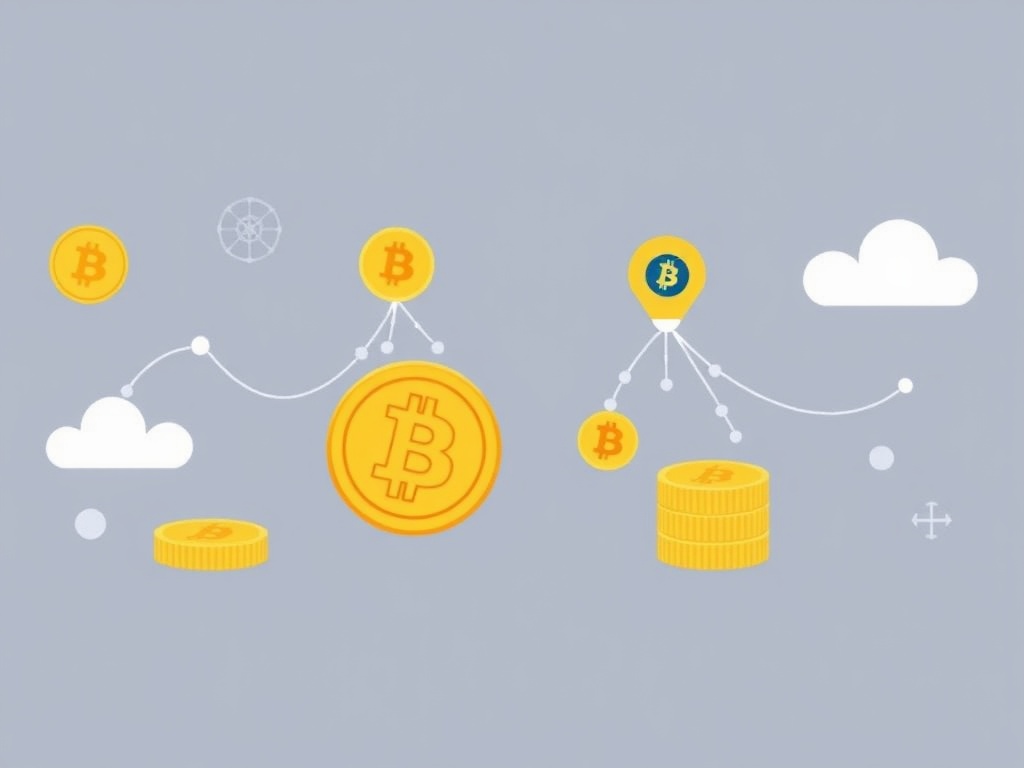
CoinJoin is a privacy-enhancing technique that allows multiple users to combine their Bitcoin transactions into a single, complex transaction. This process obscures the origin and destination of funds, making it difficult for external parties to trace the movement of coins. The core idea is to mix coins from different users, creating a "pool" of inputs and outputs that are indistinguishable from one another. The effectiveness of this mixing depends largely on the CoinJoin anonymity set comparison, which evaluates how many potential participants are involved in the process.
The Role of Anonymity Sets in Privacy
An anonymity set refers to the number of possible participants in a CoinJoin transaction. A larger anonymity set increases the difficulty of linking a specific output to its original input. For example, if a CoinJoin involves 10 users, the anonymity set is 10. However, if the same transaction includes 100 users, the anonymity set becomes 100, significantly enhancing privacy. The CoinJoin anonymity set comparison becomes essential here, as users must assess which services or protocols offer the largest and most secure anonymity sets.
How Anonymity Sets Affect Transaction Security
The size of the anonymity set directly impacts the security of a CoinJoin transaction. A smaller set increases the risk of deanonymization, as attackers can more easily correlate inputs and outputs. Conversely, a larger set reduces this risk but may require more computational resources or time to execute. This trade-off is a key consideration in CoinJoin anonymity set comparison, where users must balance privacy needs with practical constraints.
Comparing Anonymity Sets Across CoinJoin Services
Wasabi Wallet’s Anonymity Set Approach
Wasabi Wallet is one of the most popular CoinJoin services, known for its emphasis on privacy. It employs a multi-round CoinJoin process, where users’ funds are mixed multiple times to increase the anonymity set. The CoinJoin anonymity set comparison in Wasabi is notable for its scalability. By allowing users to participate in larger pools, Wasabi can achieve anonymity sets of 100 or more, depending on the number of participants. This makes it a strong contender for users prioritizing maximum privacy.
Samourai Wallet’s Anonymity Set Strategy
Samourai Wallet takes a different approach by focusing on user-controlled CoinJoin. While it does not rely on centralized services, it encourages users to manually coordinate with others to form larger anonymity sets. The CoinJoin anonymity set comparison here is less about automated services and more about community-driven efforts. Samourai’s method requires users to actively seek out participants, which can be time-consuming but offers greater control over the anonymity set size.
Other CoinJoin Services and Their Anonymity Sets
Beyond Wasabi and Samourai, several other services offer CoinJoin solutions with varying anonymity set sizes. For instance, some platforms may use smaller, more frequent transactions to maintain privacy, while others prioritize larger, less frequent mixes. The CoinJoin anonymity set comparison across these services highlights the diversity in implementation. Users must evaluate factors like transaction speed, cost, and security when choosing a service based on anonymity set size.
Factors Influencing Anonymity Set Size
The Number of Participants in a CoinJoin
One of the primary factors in CoinJoin anonymity set comparison is the number of participants involved in a transaction. A larger group of users increases the anonymity set, making it harder to trace funds. However, coordinating a large group can be challenging, especially in decentralized systems. Services that facilitate group participation, like Wasabi, often excel in this area by automating the process and attracting more users.
Transaction Size and Anonymity Set Dynamics
The size of the transaction also plays a role in CoinJoin anonymity set comparison. Larger transactions may require more participants to maintain privacy, as smaller amounts could be more easily traced. Conversely, smaller transactions might benefit from a smaller anonymity set if they are executed quickly. This dynamic requires users to assess their specific needs and adjust their CoinJoin strategies accordingly.
The Impact of Network Congestion
Network congestion can affect the effectiveness of a CoinJoin’s anonymity set. During periods of high activity, transactions may be delayed or require more participants to avoid detection. This can influence the CoinJoin anonymity set comparison by altering the practicality of achieving a desired anonymity set size. Users must consider network conditions when planning their transactions to ensure optimal privacy.
Best Practices for Maximizing Anonymity Through CoinJoin
Choosing the Right Service for Your Needs
Selecting a CoinJoin service with a strong CoinJoin anonymity set comparison is crucial. Users should research services based on their anonymity set size, security features, and user reviews. For example, Wasabi’s automated system may be ideal for those seeking convenience, while Samourai’s manual approach might appeal to users who prefer control. The key is to align the service’s capabilities with the user’s privacy goals.
Participating in Larger Anonymity Sets
To enhance privacy, users should aim to join larger anonymity sets whenever possible. This can be achieved by using services that aggregate multiple participants or by coordinating with other users. The CoinJoin anonymity set comparison here emphasizes the importance of scale. Even a modest increase in the anonymity set can significantly reduce the risk of deanonymization.
Avoiding Patterns and Reusing Addresses
Another best practice is to avoid creating patterns in transaction behavior. Reusing addresses or sending funds in predictable amounts can compromise the anonymity set’s effectiveness. By varying transaction sizes and destinations, users can further obscure their activity. This aligns with the principles of CoinJoin anonymity set comparison, where unpredictability is a key factor in maintaining privacy.
Conclusion
The CoinJoin anonymity set comparison is a vital aspect of Bitcoin privacy. As users navigate the complexities of digital transactions, understanding how anonymity sets function and how they vary across services is essential. Whether through automated platforms like Wasabi or community-driven efforts like Samourai, the goal remains the same: to maximize the difficulty of tracing funds. By carefully evaluating anonymity set sizes and adopting best practices, users can significantly enhance their privacy in an increasingly transparent digital landscape. The ongoing evolution of CoinJoin technology will continue to shape this comparison, making it a dynamic and critical area of focus for privacy-conscious individuals.

CoinJoin Anonymity Set Comparison: A Critical Analysis for DeFi Security and Privacy
From my perspective as a DeFi and Web3 analyst, the concept of CoinJoin anonymity set comparison is a cornerstone of understanding privacy mechanisms in decentralized finance. CoinJoin, a protocol that enhances transaction privacy by mixing multiple users’ funds, relies heavily on the size and quality of its anonymity set—the number of participants contributing to a single mix. When evaluating CoinJoin services, the anonymity set size directly impacts the effectiveness of obfuscation. For instance, a larger anonymity set reduces the likelihood of blockchain analysis tracing funds back to their origin, which is critical in DeFi where transparency and privacy often clash. In practice, this means users and protocols must carefully assess CoinJoin implementations. A service with a small anonymity set might offer faster transactions but at the cost of reduced privacy, while larger sets provide stronger anonymity but may introduce latency. This trade-off is particularly relevant for DeFi participants engaging in high-value or sensitive transactions, such as yield farming or liquidity provision, where exposure could have financial or regulatory implications.
Practically, the CoinJoin anonymity set comparison extends beyond theoretical metrics. Real-world applications in Web3 infrastructure demand rigorous analysis of how these sets are constructed and maintained. For example, some CoinJoin protocols aggregate users dynamically, while others rely on fixed participant pools. The former can adapt to network conditions but may introduce centralization risks if a few nodes dominate the mix. Conversely, fixed pools might ensure consistency but could be vulnerable to Sybil attacks if not properly secured. From a governance token analysis standpoint, projects integrating CoinJoin must balance privacy features with community trust. A protocol that transparently discloses its anonymity set mechanics—such as how participants are selected or how funds are routed—builds credibility in a space where skepticism about centralization is rampant. Moreover, as DeFi evolves, regulatory scrutiny around privacy tools will likely intensify. A CoinJoin service with a robust anonymity set comparison framework could position itself as a compliant yet privacy-preserving solution, aligning with both user expectations and legal frameworks.